Let Me Be Your Hands
I have had a great time using LLMs to assist with a multitude of tasks around my house. Granted, I am largely reduced to their hands, but the outcome of the combined effort is a win for the house.
Do It Yourself
Before the term AI entered the mainstream news, whenever something in the house failed, I would usually assess whether I stood a chance of repairing or replacing the failing item before calling a tradesperson. It's always good to bear in mind that when things go wrong, the damage can be worse than the initial problem. I would also consider the legality of the task before attempting to repair it myself.
Over the years I have tackled a variety of DIY tasks including plumbing, limited electrical work, plastering and even some carpentry, among others. That gave me some confidence in my ability to handle various household repairs and maintenance tasks. That also created strong habits to do certain things in a specific way, proven by experience.
Leaky toilet cistern
My toilet developed a leaky cistern, causing a small but constant drip into the toilet bowl.
As this flush mechanism was fitted by someone else and didn't seem at all similar to anything I had installed before, I was going to replace it with a familiar model.
My typical flow (accidental pun) would involve shutting off the water supply to the toilet, removing the old mechanism, inspecting it, making a trip to the shop, and fitting a new mechanism.
All of that would take a couple of hours and about £30 in materials, if all went well.
Do It With AI
I stopped myself at the very last moment and decided to consult an LLM on the approach.
I have had fantastic results using LLMs for a variety of problems beyond software engineering. I have used them to analyse legal documents, research tax matters, help diagnose health issues, plan projects, tune PC configurations, evaluate purchasing decisions, and diagnose equipment malfunctions.
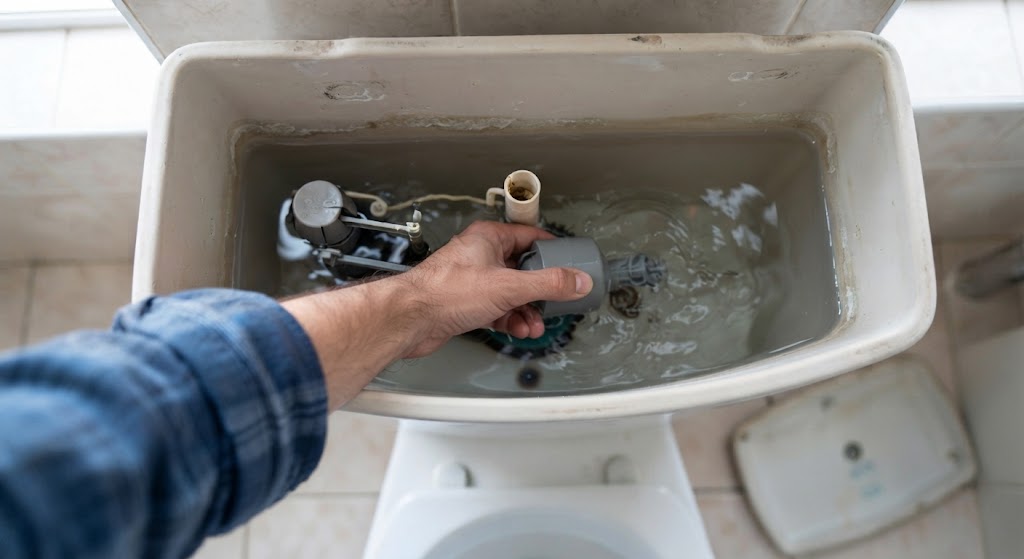
The LLM identified the flush mechanism based on a single top-down photo of the cistern's inside.
The prompt was simple and terribly written, but I guess the LLM filled the gaps:
"This type of toilet cistern. Just started to constantly leak into the toilet bowl, didn't fill up."
It provided very simple, step-by-step instructions on how to service the cistern mechanism.
More importantly, the instructions were customised for this specific cistern model.
These were detailed and mechanical, going as far as telling me what colour part I need to hold and which direction to turn and by how many degrees. It hinted that this mechanism can malfunction if some debris gets under a base seal ring. I followed the instructions and managed to locate the debris (a crumb of toilet block) wedged exactly where expected. In a matter of minutes, I removed it and reinstalled the cistern mechanism successfully without purchasing anything but a few tokens.
It saved me time, money, effort, vehicle travel and disposing of a working part.
I find this immensely helpful.
I am also going to admit that my previous method was inferior.